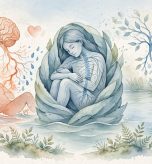
When most people picture PTSD, they think about combat veterans or survivors of violent crime. They do not picture a new mother in her living room, unable to sleep because every time she closes her eyes she is back in the delivery room, heart pounding, terrified, with no way to make it stop.
But postpartum PTSD is real. It affects more women than most people know. And it is absolutely treatable.
What Is Postpartum PTSD?
Postpartum PTSD, sometimes called birth-related PTSD or perinatal PTSD, is post-traumatic stress disorder that develops following a distressing childbirth experience. It follows the same clinical criteria as PTSD in other contexts: intrusive re-experiencing symptoms like flashbacks and nightmares, avoidance behaviors, negative changes in mood and thinking, and hyperarousal, all persisting for more than a month and significantly interfering with daily life.
The traumatic event does not have to have been objectively life-threatening. What matters is whether you experienced it as threatening. If you felt terror, helplessness, or horror during labor or delivery, that is sufficient for a trauma response to form.
Postpartum PTSD vs. Postpartum Depression: Why Getting It Right Matters
Postpartum PTSD is frequently misidentified as postpartum depression, which leads to treatments that do not quite land on what is actually happening. The clearest distinguishing features are the presence of intrusive re-experiencing symptoms, flashbacks and nightmares that specifically revisit the birth or postpartum events, and avoidance behaviors tied to those specific memories.
PPD involves broader mood disruption without that same quality of reliving. Both can coexist, and at EMDR Healing Therapy we assess for both so nothing gets missed. Learn about our depression and anxiety management approach and our specialized trauma and PTSD recovery services.
What Postpartum PTSD Actually Looks Like Day to Day
The Birth Keeps Coming Back
Images, sounds, or sensations from the delivery intrude without warning. As flashbacks during the day. As nightmares at night. These are not just memories. They carry the same fear, the same physical alarm, the same helplessness as when it was actually happening.
You Work Hard to Stay Away From Reminders
You avoid birth-related social media, dread OB follow-up appointments, and cannot talk about what happened without shutting down. Avoidance feels like the only way to stay functional, but it also blocks the processing that would actually bring relief.
The Way You See the World Has Changed
A hallmark of PTSD is a fundamental shift in how safe the world feels. You may feel that nowhere is truly secure. That your body failed you. That you cannot trust your providers, your own judgment, or your ability to protect yourself or your baby. This cognitive dimension is as important to address as the flashbacks.
You Cannot Turn the Alert Off
Hypervigilance is exhausting in a way that is different from regular new-parent tiredness. You startle easily. You cannot tolerate uncertainty. Your guard will not come down. Sleep feels nearly impossible to achieve or sustain.
You Feel Distant From Your Baby
Emotional numbing, which is a core feature of PTSD, can extend to the bond with your newborn. If you feel strangely flat or disconnected when you are with your baby, that is not indifference. That is trauma’s shutdown response. It is a symptom, not a verdict on who you are as a mother.
Evidence-Based Paths to Healing
EMDR Therapy
EMDR is among the leading evidence-based treatments for PTSD. It is particularly well-suited to birth trauma because it works with the body’s stored trauma response rather than only the story the mind tells about it. Our EMDR therapy in San Diego is delivered by trained clinicians who specialize in perinatal mental health.
Trauma-Focused Therapy
Beyond EMDR, trauma-informed work that rebuilds a sense of safety, addresses the cognitive shifts PTSD produces, and allows the nervous system to complete its interrupted response is central to lasting recovery. See our trauma recovery services.
Support for Your Relationship Too
PTSD puts enormous strain on intimate relationships. Partners often do not understand why their loved one cannot simply move on. Our family and relationship support work addresses that alongside individual trauma processing.
PTSD is not a sign that you are weak. It is a sign that your nervous system went through something it did not have the support to process at the time. And that support is exactly what we provide.
You Deserve to Heal from This
Postpartum PTSD does not have to define your experience of motherhood. Treatment works. You do not have to be at your worst to deserve it.
Reach out to EMDR Healing Therapy in San Diego at (858) 289-0671. We are open Monday through Saturday, 8:00am to 6:00pm, and Sunday, 9:00am to 2:00pm.